
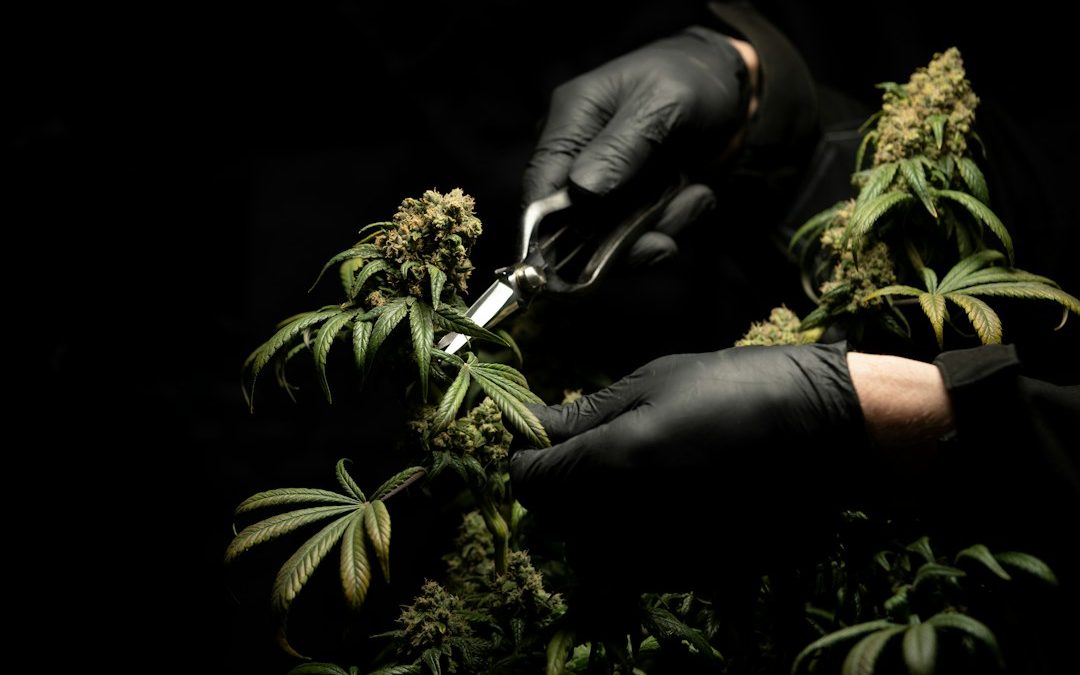
TAC cannabis testing can feel like a pop quiz you did not study for. You ship a lot, you get the COA back, and suddenly there is a big number staring at you like it is trying to start an argument. Before you start rewriting SOPs at midnight, take a breath. TAC is usually a process signal, not a straight-line answer about consumer safety.
In this post, you will get a practical way to read Total Aerobic Count results, figure out what changed in your workflow, and choose next steps that protect your timeline and your margins.
What TAC cannabis testing measures (and what it leaves out)
TAC, short for Total Aerobic Count, is a measurement of how many viable microorganisms grew under oxygen-friendly conditions. Labs typically report it as colony-forming units per gram, or CFU/g. Most of the time, the lab is doing a culture-based method: dilute, plate, incubate, count what shows up.
That makes TAC a useful “how clean was the process?” indicator. It does not make it a great “is this dangerous?” test. Total counts do not tell you which organisms are present, and they do not confirm pathogens without follow-up work. That basic limitation is echoed in the Colorado cannabis testing reference library, which stresses appropriate controls and confirmation when you are actually trying to determine risk.
Think of TAC like a dashboard light. It tells you something is trending in a direction, but you still have to pop the hood.
Why high TAC cannabis testing results are not automatically “unsafe”
A high total aerobic microbial count can come from a few different realities, and not all of them are scary.
- Some of the organisms might be harmless. A lot of bacteria that grow on plates are common environmental hitchhikers.
- Some of the organisms might be on purpose. If you use beneficial microbes in cultivation, you can see elevated CFU numbers even when your true pathogen risk is low.
- The method can nudge the number. Media choice, incubation settings, and sample prep can change what grows and how much of it you recover.
So yes, you should take a high TAC seriously. Just do it like an operator: look for what changed, where it changed, and whether it is repeatable.
TAC cannabis testing limits: what the threshold is really telling you
Action limits exist because regulators need a line in the sand. But those lines are not universal, and they are not always a perfect fit for cannabis biology, product formats, or modern post-harvest realities.
You will often see state programs use action levels that look like 105 CFU/g for flower and 104 CFU/g for some manufactured products, with plenty of variation by jurisdiction and category. Some programs are also shifting attention toward targeted pathogens rather than broad total count gates.
It is also worth knowing that respected industry references have cautioned against treating total count tests as the only pass/fail lever. You can see that theme reflected in the Nevada Cannabis Compliance Board public comments, which cite language pointing out the limits of using total microbial counts as a sole decision point.
| What you see on the COA | What it often points to in your operation | What it does not prove |
|---|---|---|
| TAC higher than your normal baseline | Dry/cure drift, higher water activity, more handling, sanitation execution slip, seasonal pressure | That a specific pathogen is present |
| High TAC but other micro panels look clean | Benign bacteria, beneficial microbes, or method-driven recovery differences | That the lot is “perfect” for every use case or storage condition |
| Borderline TAC with lab-to-lab variation | Sampling variance, heterogeneous distribution, inconsistent homogenization, method differences | That your process is stable and predictable |
What high TAC usually says about your process (the unglamorous stuff)
If you are trying to make TAC results useful, stop asking “what did the lab do?” and start with “where did the microbes get a better day than usual?” In our experience, high TAC is often the first visible sign of a small drift that has been building for a while.
Common contributors we see when teams chase down high TAC:
- Moisture and pace issues: slow dry, uneven dry, wet staging windows, pockets of higher water activity
- Airflow and room discipline: intake air quality, filtration gaps, pressure imbalances, traffic patterns that turn “clean areas” into thoroughfares
- Handling and shared equipment: bins, tables, trim machines, carts, and gloves moving across rooms without a clear clean workflow
- Sanitation drift: the SOP exists, but contact time, coverage, or verification is inconsistent on a busy week
- Storage conditions: warm holds, humid storage, long dwell times before packaging or final test sampling
If you want TAC to stop being a surprise at the finish line, treat it as a trend metric with checkpoints along the way. Your sampling plan matters more than people like to admit. If you need a simple structure to build that into your QA system, use our guide on building a cannabis microbial sampling plan to set lot definitions, sample points, and documentation that is consistent across teams and seasons.
TAC cannabis testing methods vary, so your interpretation has to keep up
You have probably lived this: one lab reports a borderline pass, another lab reports a fail on the same lot. Annoying, yes. Always fraud or incompetence, usually no.
Culture-based aerobic plate count methods only count organisms that actually grow under the specific conditions used. Change the media, incubation parameters, or sample preparation, and you can change CFU recovery. The method is not “wrong.” It is just a method with boundaries.
Method choice is also why a high number should not automatically be treated like a hazard statement. Medicinal Genomics makes this point in its aerobic count testing overview, noting that what you detect depends heavily on how you test.
When you are troubleshooting, ask your lab three practical questions:
- Which method are you using, and what media and incubation conditions are involved?
- What is the limit of detection, and how do you handle dilutions and countable ranges?
- How are you homogenizing the sample, especially for sticky or heterogeneous matrices?
That conversation will save you from chasing ghosts, and it will help you build internal trend data that actually means something.
How you respond to high TAC cannabis testing results without setting your operation on fire
The goal is simple: protect safety and quality while keeping release decisions steady. You do not need heroics. You need a repeatable workflow.
- Put the result in context: compare it to your baseline for similar rooms, cultivars, and time of year. One number without history is just noise.
- Look for co-signals: water activity, moisture, yeast and mold, environmental monitoring, and any recent deviations in staffing, HVAC, or dry room parameters.
- Map the batch flow: identify the highest-touch and highest-humidity steps. That is usually where TAC gets its momentum.
- Correct and verify: tighten sanitation execution, traffic control, and dry/cure controls, then verify with follow-up sampling.
- Decide where a kill step belongs: validated decontamination can reduce bioburden and stabilize outcomes when it is integrated as part of the system, not used as a last-minute scramble.
If high TAC is causing holds, retests, or last-second remediation decisions, you should put a dollar value on that chaos. Your team already feels the pain. Quantifying it makes it easier to prioritize fixes. Start with our decontamination ROI calculator to translate variability into cost, throughput impact, and risk exposure.
A TAC-ready operating system: Prevent → Detect → Decontaminate → Verify → Document
When you see TAC swing, it is tempting to fixate on the final test. You will get better results, and fewer unpleasant surprises, if you build a simple contamination-control rhythm that your team can actually run week after week.
- Prevent: control moisture, airflow, traffic patterns, and sanitation fundamentals
- Detect: use environmental monitoring and in-process checkpoints, not only final COAs
- Decontaminate: use a validated kill step where it fits your workflow and risk profile
- Verify: confirm outcomes with testing and trend results over time
- Document: keep SOP versions, training logs, deviations, CAPAs, and batch records audit-ready
That is the backbone of how we think about “clean cannabis” at Willow Industries. If you are evaluating a post-harvest ozone workflow, review the WillowPure decontamination systems to see how purpose-built equipment, onboarding, and documentation support can help you run microbial reduction as a controlled step rather than a one-off event.
Ready to talk to a microbial reduction expert? Contact Willow Industries to discuss your TAC reduction needs and get help building a proactive solution that fits your operation.
FAQ: TAC cannabis testing and total aerobic microbial count
Does high TAC cannabis testing mean the batch is dangerous?
Not necessarily. TAC tells you how many aerobic organisms grew under the lab’s conditions. It does not identify the organisms, and it does not confirm pathogens without additional work. Treat it as a signal to investigate and trend, especially if the number is rising over time.
Why can flower that looks and smells fine fail total aerobic microbial count?
Because microbes are not visible at compliance-driving levels. Small moisture pockets, uneven drying, and high-touch handling points can push TAC up even when the lot looks normal.
Is TAC cannabis testing consistent across labs?
No. Differences in media, incubation, sample prep, and homogenization can shift CFU recovery, especially near a limit. If TAC is a recurring pain point, align your internal trending to a consistent method and ask your lab to walk you through their workflow.
What is the best way to use TAC results in day-to-day QA?
Use TAC as a process KPI. Trend it by room, cultivar, season, and post-harvest pathway. When it moves, look upstream at drying/curing control, sanitation execution, handling flow, storage conditions, and environmental monitoring before you assume the problem is “the lab.”
Conclusion: Treat TAC as a signal, then tighten the system
High TAC cannabis testing results are a yellow flag, not a verdict. They tell you your overall bioburden is higher than you want, but they do not identify a specific pathogen or automatically define consumer risk. When you respond with trend data, root-cause work, and tighter preventive controls, TAC becomes something you can manage instead of something that manages you.
If you want to reduce COA surprises with a proactive, repeatable kill-step approach, start by reviewing the WillowPure decontamination systems and mapping where decontamination fits into your post-harvest SOP and release workflow.